
Ameer develops biomaterials and nanotechnology for regenerative engineering, tissue engineering, medical devices, drug delivery and cell delivery applications.

Innovation in the biosciences is essential to helping us live longer and healthier lives.
Northwestern scientists and researchers deliver cutting-edge treatments and cures through their pathbreaking work in synthetic biology, chemistry, cancer research, public health and more.
With collaboration across schools, campuses and partners such as Northwestern Medicine, a significant percentage of the University’s research enterprise is dedicated to the biosciences. This page provides a snapshot of the transformative work taking place at Northwestern.


Lurie Cancer Center is one of only 57 NCI-designated Comprehensive Cancer Centers, a founding member of the National Comprehensive Cancer Network and a Lead Academic Participating Site in the National Clinical Trials Network. Its strengths include a hematopoietic stem cell transplant program that performs 350+ transplants annually, Illinois’s first and only proton therapy center and OncoSET, a pioneering precision-medicine program.

Northwestern鈥檚 researchers make breakthroughs that advance healthcare for everyone.
With an emphasis on translational medicine, our physician-scientists and engineers are at the forefront of research and discovery.


McNally researches genetics of cardiovascular and neuromuscular disorders and studies genetic mechanisms responsible for inherited human diseases.
Learn about Northwestern鈥檚 leadership in the biosciences.
See Northwestern鈥檚 new developments in support of this priority.

Cellular gate dilates and constricts like an eye鈥檚 iris to let molecules pass through
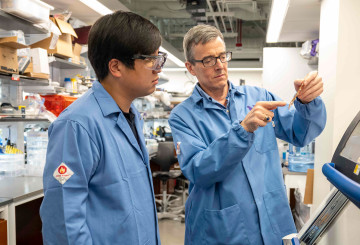
New institute will create a streamlined path from device innovation to patient care

Implant could restore lost senses, provide sensory feedback for prosthetic limbs

First study to use worn face masks as a passive tool to monitor indoor air
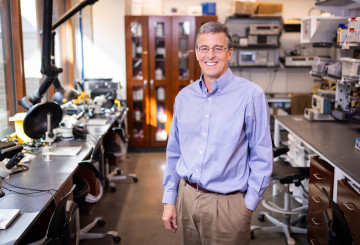
Querrey-Simpson Institute for Translational Engineering for Advanced Medical Systems launches with $29 million in support from Trustee Kimberly K. Querrey
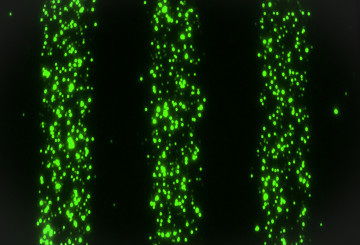
New technology illuminates the messages that cells leave behind